Showing posts with label Connected. Show all posts

Sunday, March 18, 2018

A Rational Approach: Using Twitter As Professional Development and Possible Classroom Implementation! LIS568


When I finally signed up for Twitter, after many friends were consistently encouraging me to, my initial response was that I can really see certain functions of Twitter providing me, as an educator, with quality professional development (PD).  After spending a little time with Twitter my initial response to its use in the educational world still holds true.  In fact, once my professional learning network (PLN) began to slightly grow I started valuing Twitter for more than its Twitter chats.  Where Twitter chats certainly provide an amazing opportunity for professional development, the overall functionality of Twitter when used only for professional aspects provides a diverse, vast, and organized educational resource.  A resource that allows educators and students to easily search for specific topics through the use of hashtags, ultimately allowing educators to partake in quality and convenient PD while students are introduced to a vast and quite organized resource.

Let me first start by saying that this is a truly unbiased discussion.  Meaning if I found no value in Twitter in terms of providing me, as an educator, with assistance to my day-to-day tasks I would not waste my time sharing positive thoughts of such technology.  With that said, the most useful function of Twitter to me, as of now, is its ability to provide me with quality conversations that fit into my schedule.  These conversations, referred to as Twitter chats, are conversations that truly provide me with meaningful and relevant professional development.  The best part of such PD is that it doesn't interrupt my daily schedule.  I can literally be laying in bed at the end of a long day gaining more engaging and beneficial PD than if I attended a workshop in the evening.  Don’t get me wrong, I have been involved with many workshops that I truly have found valuable to my professional career, but if I had to choose staying at work for another 3 hours, of course after waiting an hour or two after school for the workshop to start, or going home after a long day, I think it is obvious I would choose the latter.  Through using resources such as Participate or Education Chat Calendar, one can easily locate Twitter chats to partake in.  The most important and beneficial aspect of Twitter chats is that users can pick and choose exactly what conversations they want to be a part of.  Feeling like you need a little pick-me-up in regard to education technology search #ATchat, or search #elmused if you want to focus on elementary art.  If there are two chats you find intriguing that are scheduled for the same time on the same night, why not partake in them both at the same time?  The flexibility, diversity, and overall quality that educators can receive from twitter chats are what makes it such a valuable resource for educators. 

Although Twitter chats offer quite a lot in terms of PD, the overall PLN that Twitter provides educators with is truly a meaningful function.  By following other professionals, users are able to build a network with other educators that offer ideas, materials, resources…etc. which can be utilized with ease.  As Scavitto (2015) states discussing her Twitter usage, “The people in my PLN share amazing materials about all aspects of education.”  Not only are educators able to gain valuable resources, but the diversity of such material allows users to become exposed to new and innovative aspects.  More importantly, discussing such vastness of resources Scavitto (2015) states, “Articles like this would have been buried in the vastness of the web for eternity-but I get to read them because they appeared in my feed.”  With the utilization of hashtags users are able to have an organized system for storing and finding resources.  As Pitler (2015) suggests, “The secret to getting the most out of Twitter as an educator lies in knowing how to use hashtags (#)- those things we used to call the number signs last century.”  For example, if you are in need of a poster creator for students to use as a summative assessment tool but want to use a different tool than the typical Google Docs or Pages, a quick search using an appropriate hashtag such as #edtech can introduce you to the application Google Drawings.  Even more impressive is that if you are following the “correct micro-bloggers” in relation to a given interest, as Scavitto points out, information regarding Google Drawings could have just simply been present in your feed.  Thus, the importance of following the most beneficial micro-bloggers in regard to a given interest is extremely important.  As Scavitto (2015) states, “If you’re going to use Twitter for things beyond curating a collection of educational resources, I suggest having multiple accounts.”  Mixing interests outside of a professional focus will simply provide a user with additional content that can lead to an overall scattered and overloaded feed. Thus, defeating the purpose of using Twitter as professional development means.

Overall Twitter can provide educators and students with vast, diverse, and meaningful content.  Educators can advocate and implement for their students to utilize Twitter in very similar ways that they would.  However, being familiar with its functions and how to navigate the resource will help lead to a positive and beneficial experience for you and your students if you implement such features into your instruction.  Twitter chats offer an incredible opportunity for educators and students to partake in active and relevant discussions surrounding basically any topic of interest.  More importantly, through utilizing resources such as Participate and Education Chat Calendar, users have the ability to plan ahead as well as have the flexibility to attend Twitter chats through the comfort of their homes.  It is common for Twitter chat users to follow the other professionals that were part of the chat, ultimately allowing for a meaningful PLN to continually grow.  With the nurturing of a quality and relevant PLN, other professionals’ posts continually show on your home feed allowing easy access to resources, ideas, materials…etc.  With the understanding and the use of hashtags, students and overall users are able to be easily organized with such a vast amount of materials.  However, users must be mindful of only following other users that add to their repertoire of educational resources, ultimately creating a meaningful, relevant, and vast professional learning network.  As Pitler (2015) states, “Once you get started you just might become an evangelist.”  Of course, we can assume Pitler’s thoughts are to convert the non-Twitter users to simply Twitter users, not to turn such non-users into Christians!

References
Berger, R. (2015). Using twitter to supercharge your professional development. ConnectedEducators. Retrieved from http://www.connectededucators.org/using-twitter-to-supercharge-your-professional-development/.

Scavitto, D. (2015). Teachers: embrace twitter for professional development. Edudemic. Retrieved from http://www.edudemic.com/teachers-embrace-twitter-professional-development/.

Sunday, March 4, 2018

Customize With TED-Ed LIS568


In an attempt to add more digital and web based learning into my classroom I created a TED-Ed lesson.  If you are unaware of what TED-Ed has to offer you should certainly check it out.  It is a great free resource to use just for its video content alone.  However, if you want to customize your students’ experiences you can create your own lessons that include video content, comprehension questions, extended content, and discussion threads.  For example, a lesson I have created in the past is called Basic Geography, and the content provides students with exactly what the name suggests, a chance to support their understanding in basic Geography.  My specific purpose for the lesson creation was to support my current students with both review material as well as an introduction to new material.  TED-Ed is a great resource if you are attempting to flip your classroom, a librarian teaching information literacy, and overall any educator’s experience regarding educating our youth.  As an educator and coach, my time is valuable, thus the ease of high quality customized content that TED-Ed allows me to create is essential.

Within the lesson Basic Geography students are given a prompt that allows them to engage in a digital conversation with their peers.  Through their discussion they demonstrate their ability to interpret, organize, and ultimately share read material.  As an assessment, students construct an at least five sentence discussion post.  The discussion post allows students to convey their ideas on the information they received within the lesson.  When using TED-Ed in the classroom I make sure that the discussion portion of the lesson (Discuss section) is a significant aspect to what students are asked to complete.  In my TED-Ed lesson I synthesized the given information found within the Watch, Think, and Dig Deeper sections to lead to a meaningful discussion post.  Where I do find the Watch and Think section to be a beneficial aspect of the lesson, more importantly students get to explore relevant information in the Dig Deeper section allowing for a greater sense of understanding.  By tying the Discuss section to the previous sections, my students get to partake in a social media based/connected lesson.  I also ask my students to respond to at least two other peers’ responses, making the lesson that much more collaborative and social. 

What makes TED-Ed so valuable is that I am able to supply my students with direct instruction through the Watch and Think sections, then allow them to share and create their own content through the Dig Deeper and Discuss section.  The flexibility of the lessons allow me to assign students such lessons for home work or provide opportunity to review material outside of the classroom, knowing that students will receive the direct instruction needed to partake in the social aspect of learning.  I can also expand the Discuss section to have students share articles or other found information from the web.  Honestly, it provides me the proper organization to allow elementary students to begin to expand their learning experiences through digital and social means.  Furthermore, applications such as TED-Ed give students the ease of becoming content creators rather than simply content consumers.

Saturday, February 10, 2018

To Blog or Not To Blog LIS 568

Being part of the 21st century and living in this always evolving technology generation is a pretty awesome thing!  I feel as if I could honestly learn something new everyday of my life off of the internet.  As teachers, having the World Wide Web is such a valuable aspect to education, especially when utilized effectively in the classroom.  Being in a district that provides students with 1:1 iPads, I absolutely take advantage of the benefits digital devices with network connection provide my classroom.  It certainly takes work on my end to stay up to date, and do my best to learn new practices as technology continues to develop and grow.  However, the benefits are well worth it.  

After some research on the possibilities and benefits of blogging, I truly would like to incorporate blogging into my curriculum.  Where there are many ways one could use blogging, both for personal development and classroom practices, having students construct and post short book reviews fits into my curriculum perfectly!  I teach at the elementary/middle school level, thus I encourage reading throughout each year by tracking our overall classroom progress with a tracking chart.  It’s actually a cool tracking chart that I made in undergraduate work many years ago of a mountain and a little hiker dude that treks up the mountain as students complete books.  Students can earn parties when reaching camp 1, 2, and the summit.  Anyways, I have students complete a short book review worksheet that I check and give credit for completion.  By having students simply blog their book reviews, not only would the book review be easier for me to look at, but other students could read the reviews as well.  Thus, helping my classroom become that much more student centered.

Throughout the school year, I always try to incorporate current event work.  I like to add in speaking and presentation skills with the current event work as well.  I provide students with an organization template that allows for them to summarize their articles they read.  Once their research is complete, students present their article and their thoughts to the class.  In future years, instead of just having students present their finding to the class I want to introduce blogging their thoughts and summaries of the current event articles as well.  Students can then present to the class using their blog on the overhead, or students could check out other students’ blogs and comment on their posts…etc.  It should be interesting to see the growth of students’ posts from the beginning of the year to the end.  

Whether you are a classroom teacher, library media specialist, or any other special area educator incorporating blogging into your curriculum can be a great way to work on English language arts skills, technology skills, and collaboration skills.  More importantly, students are learning to become content creators rather than simply consumers. As stated by Broad (2015), “Engaging students in activities that align closely to higher-order thinking skills like creating, evaluating and synthesizing certainly seems more transformative than asking them to search for information on the internet.”  Being content creators rather than passive consumers allows our students to truly engage in a relevant and rigorous task, ultimately allowing them to gain experience in 21st century skills.  Such 21st century skills can be very important for their college and career success.  Some free resources to start such blogging adventures are as follows: Blogger, WordPress, and Weebly.


Get out there and start blogging, or don't, totally up to you, but I definitely am!

References
Broad, S. (2015). Creators, not consumers. Education Technology. Retrieved from http://edtechnology.co.uk/Article/creators-not-consumers.

Saturday, November 18, 2017

Digital Immigrants, Digital Natives, and Digital Enjoyers

As technology continues to grow in usage within society, the eduction field is drastically being impacted by the affects of such usage.  As suggested by Prensky (2001) in an article titled Digital Natives, Digital Immigrants Part 1, instant messaging, cell phones, e-mail, computer games, and the internet in general are examples of such technologies that surround society’s everyday life (p. 2).  The results of this ever so connected world is believed to be changing the type of students, we as educators, are interacting with on a daily basis.  Pensky (2001) introduces the idea that the type of student that is currently present in the classroom is much different than the teacher that is educating them.  He discusses the idea that current students can identify themselves as digital natives, whereas the teachers can identify themselves as digital immigrants (p. 3).  A digital native being an individual born into a society with such technology, as mentioned earlier, present, and a digital immigrant as an individual that was not born into such a society but became fascinated and learned how to use such technologies.

In a video titled Do “Digital Natives” Exist? by PBS Idea Channel, it is suggested that digital natives are those born after 1980.  However, I was born in 1989, nine years later than suggested in the video, and I can not consider myself a digital native.  I feel I would fall more into the digital immigrant category.  Possibly, somewhere in the middle?  Although I did have internet, it was dial-up, which meant I could only use it for certain amounts of time before being yelled at to get off, thus the phone lines in the house could be used again.  Email, on the other hand, was used, but AOL instant messenger was much more popular.  Cell phones were nonexistent until I reached about 8th grade, and I believe at that point it was a pre-paid Firefly!  Although, soon after the flip phone became popular with wireless carrier plans.  Computer games begin in my memory as the floppy disc Oregon Trail in elementary school with slow massive desktops.  I suppose I do meet the majority of criteria to be considered a digital native, however the advancements within such technology certainly happened over a short period of time during the 1990’s.  I feel that the digital native born date should be moved more to around 1995 rather than 1980. 

Although I associate myself more as a digital immigrant rather than a digital native, I don’t ever experience any frustration with new and innovative technologies.  In fact, I enjoy diving head first into new technologies.  However, at times I am definitely a little stubborn when it comes to jumping on band wagons.  For example, it took me until this year, 2017, to join the Twitter and Pinterest crews and I still do not have an Instagram.  I do enjoy photos though, thus I’m not quite sure why I haven't joined Instagram yet.  Hence the stubbornness.  Even though I feel very comfortable with using and figuring out new technologies, I don’t necessarily agree with the way that the majority of society uses such technologies.  We are becoming a society that is connected more so than ever before and only views such technologies as entertainment.  I see it on a daily basis in my classroom.  I consider my 4th grade students, who were born in 2007 and 2008, digital natives.  Thus, to incorporate my generation, being born in the late 1980s and early 1990’s, in the same digital native category as my 4th grade students seems a little irrational.  I feel that we might need to revise the understanding surrounding digital natives and digital immigrants.  Maybe adding a category that lies in-between digital immigrants and digital natives would be something to consider.  Or, adding a group after digital natives that covers individuals born after 1995 called digital enjoyers (Logan, 2017)?

References
Logan, M. (2017). Digital Immigrants, Digital Natives, and Digital Enjoyers. Blogger. Retrieved from http://infinitebrainwork.blogspot.com/.

Marc Prensky, (2001) "Digital Natives, Digital Immigrants Part 1", On the Horizon, Vol. 9 Issue: 5, pp.1-6, https:// doi.org/10.1108/10748120110424816.


PBS Idea Channel. (2013). Do digital natives exist?. YouTube. Retrieved from https://www.youtube.com/watch?v=9WVKBAqjHiE.

Wednesday, October 25, 2017

Make The Flip!?

Being part of the education system during times of such connectivity allows educators to collaborate and develop in ways that were not possible before the 21st century.  Educators can now connect via the web and share classroom ideas, materials, theories…etc. through what seems like an endless amount of platforms.  With such resources comes new pedagogical approaches.  As internet has seen its way into the majority of society’s homes, the educator’s practices are now not as restricted.  A pedagogical approach that has been born from less restrictions is that known as the flipped classroom.  The flipped classroom is continuing to grow within the education field, as many educators are beginning to adopt and implement such techniques.  Over the past few years, not only have some colleagues made the flip, but more and more interest is being generated by the new and innovative approach.

The flipped classroom is an instructional strategy that limits the teacher’s direct instruction approaches.  Instead of students receiving direct instruction from their classroom teacher, they receive it from assigned work outside of school.  Thus, class time becomes much more student centered.  As stated by Graney (2013), “What happens in the flipped classroom revolves around the learners’ needs.”  Being an educator in New York and having to meet our annual professional performance review (APPR) needs, in order to truly be a highly successful teacher our classroom must be extremely student centered (based on New York's requisites).  Scoring highly effective is a “piece of cake” when utilizing such a student centered approach as the flipped classroom.  With students partaking in the direct instruction aspect of topics at home, during class time teachers are able to spend time helping students that might be struggling, clarifying to a group a certain aspect that is troubling them, or working with an individual one on one.  Not only do more students get their needs met in the classroom, they also are able to work at their own pace outside of the classroom as well.  Graney (2013) states, “By moving instruction outside of class, learners gain control over their learning. Learners who get lost in class as the teacher explains more quickly than they can process can now stop the video and review.”  

Although not the only technique, utilizing videos as the instructional aids for assigned tasks at home has become a very popular practice with the flipped classroom.  Thus, being familiar with resources to find and tailor such media is very beneficial to the overall success with the flipped classroom.  Educators should not only limit themselves to using already made videos, as creating such videos can prove to be a useful process as well.  To find pre-made videos TedEd, YouTube, ShowMe, Khan Academy…etc. are all great tools to get started.  To create videos, educators might think about utilizing a screen casting applications such as Sceencast-O-Matic, or the screen recording function that is now available with the iOS 11 update.  Windows Movie Maker and iMovie are great starting points for movie editing tools as well.  With that said, implementing the flipped classroom into your everyday practices can truly give you an opportunity to meet all of your learners’ needs.

Not only can flipping the classroom provide a more effective learning opportunity for the general education student, but such approaches have also been understood to increase English language learners’ (ELLs), struggling students’, and advanced students’ content comprehension as well.  As Marshall (2013) states, “For ELs, it is equally about the videos and the in-class portion because the videos provide comprehensible input that students might otherwise not be able to access.”  Those students who are struggling are able to not only take their appropriate pacing at home, but during in-class sessions students are able to clarify content that has posed difficult to them with their educator.  Graney (2013), discussing this understanding of in-class time states, “The activities may elicit the misunderstandings, they may take the students deeper into the subject, and they should provide students with opportunities to learn or relearn the elements of the lessons that they find difficult.”  An approach that I find intriguing is that advanced learners can help with the creation of instructional videos.  Why not allow those students who need more of a challenge help in the creation of course material?  You not only provide such students with a deeper learning experience, but you also lessen your work load!


With the flipped learning approach comes more, or as I like to look at it different, work.  Not only do educators have to plan in different ways, but students quickly realize that they too have to approach their studies slightly different.  As Graney (2013) states, “The students used to ‘playing school’ successfully may find the approach frustrating as it makes demands beyond simply having the correct answer.”  This understanding makes absolute rational sense, as most likely the only education students have received before entering a flipped classroom involved more traditional approaches.  Lets face it, traditional approaches are less focused around deep learning and more geared towards memorization, as students very seldom truly remember much from previous years.  Just the other day I began a social studies unit, and what I thought would be review for Geography content ended up being the focus of my planning for the entire rest of the week.  Flipping the classroom puts more accountability on the students as well, as they are responsible for their studies outside of the classroom.  It is very easy to tell whether a student is being responsible outside of the classroom, in terms of academics, because their contributions, questions, and overall content understandings will show during in-class sessions.  Providing students with the opportunity to grow in accountability, responsibility, and overall academic success will certainly benefit students in their college and career endeavors.  As an educator thinking about flipping your classroom, I recommend a slow transition.  Get to know and become comfortable with the technology you will be using.  Take your current direct instruction lessons and begin to make resources your students can utilize outside of the classroom.  Join professional learning networks such as the Flipped Learning Global Initiative.  Overall, enjoy teaching in such an awesome and connected epoch of society!


References
Graney, J. (2013). Flipping Your EL Classroom: A Primer. TESOL Connections. Retrieved from http://newsmanager.commpartners.com/tesolc/issues/2013-10-01/3.html.

Marshall, H. (2013). Three Reasons To Flip Your Classroom. TESOL International Association. Retrieved from http://newsmanager.commpartners.com/tesolbeis/issues/2013-08-28/6.html.

Sunday, October 8, 2017

Are Your Search Results The Same As Mine?

One of the best aspects about being a scholar and educator that focuses a lot of their research in the technology field is that there is always something new to become informed about.  In other words, there is never a dull moment!  Have you ever thought about what results you receive from doing a Google search and how such results compare to a friend’s results of the same exact search?  Well, go and try it some time as you might be surprised.  The terms “filter bubble” and “echo chamber” might not mean too much, if anything, to you.  In fact, such terms meant nothing to me three days ago as well!  Before I discuss the two, possibly, foreign terms, let us all understand that the internet that we view on a daily basis is composed of many algorithms that guide such vast and diverse information as to what ends up in front of our eyes, on our computer screen, and ultimately what we view with each passing click.

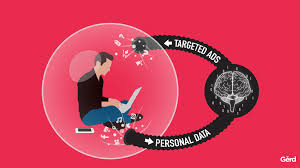
When one rationally attempts to understand the meaning of both terms filter bubble and echo chamber surrounding our internet usage, I believe we can come to an understanding that the internet’s information is being filtered into some sort of bubble that also involves a chamber of echoing searches, clicks, friend’s searches…etc.  Specifically, a filter bubble is the use of algorithms to filter certain information into a personal bubble, where an echo chamber also uses algorithms to echo or communicate what clicks, searches, friends selection, friends’ searches…etc. to the filter bubble in which you exist in.  Essentially, both filter bubbles and echo chambers are working together to provide you with exactly what you “want” to see.  As Pariser (2015) states in regard to such algorithms, “After all, they mediate more and more of what we do. They guide an increasing proportion of our choices-where to eat, where to sleep, who to sleep with, and what to read. From Google to Yelp to Facebook, they help shape what we know.”  If this is your first time hearing of such aspects of our internet, yes, I too had some strong feelings regarding such actions.  However, it might not be all that bad as we might have some say in such operations.

Critics such as Eli Pariser have made such internet operations known and, as they should, some of the “culprits” for creating and using such operations have responded.  According to Moon (2015), “Facebook wants you to know that you’ve only got yourself to blame for the lack of diversity in views on your News Feed… ‘Filter bubble’ is what you call the situation wherein a website’s algorithm shows only posts based on what you clicked (or Liked) and commented on.”  Basically, Facebook is responding to such allegations by blaming the algorithms’ functions on the users themselves.  Saying that the algorithms only respond to what the users input into them, in terms of their choices of media to view.  Where Facebook is technically right, the fact that such algorithms alter what we see at all is a cumbersome thought in itself.  Although, without such algorithms how would the vast and diverse amount of information on our internet be sifted?  I suppose by most recent creation? Or, how about alphabetically?  I suppose we can’t be too upset with such organizations such as Facebook, as they kind of are just doing their job in a way they think might make the user satisfied.

Now that we have discussed a major part of what truly shapes the internet and how we view it, how has it possibly affected us as a society and what does this mean for our future usage?  Well, when we take a step back and think about what the results of such filter bubbles and echo chambers have caused, I believe it is very rational to understand that we have been exposed to basically only our view point.  Information that has an opposite viewpoint has been filtered out, ultimately to better our viewing experience.  Does this mean we have unknowingly been sifted into a society that is filled with individuals which have difficulty understanding opposing thoughts and views on different aspects of life in general?  Could this have lead us to much of the hatred that has recently been present within our society?  The answers to these questions are currently just not fathomable, as there has not been extensive research to back up such claims.  Thus, rather than looking into the past we must look into the future.


Eli Pariser (2011), in a TED presentation titled Beware online “filter bubbles,” talking to software engineers in general states, “…People who have helped build the web as it is, and I’m grateful for that. But we really need you to make sure that these algorithms have encoded in them a sense of the public life, a sense of civid responsibility.”  In other words, it is essential that we are not only coming across and viewing information that is solely chosen to satisfy our current views based on what we personally click on or what are friends on social media click on.  We must have diversity in what we view, ultimately allowing us to become more understanding or at least educated on society’s opposing views.  Although Facebook has released information on updates that they are working on and have released to help combat the filter bubble, as Pariser (2015) suggests, Facebook is still in control as to what information is released to the public as studies have to get Facebook’s permission in order to be released.  However, hopefully software engineers see the value in not “trapping” their users in filter bubbles and echo chambers, ultimately offering our society more “hard” news, the news that is of true importance and unbiased to our ideas, rather than “soft” news, the news that surrounds only our interests.  As current users, being informed and informing others on such internet operations can only help our view on society as a whole, as it might potentially help limit society unknowingly falling into a self centered world.  After all, as Pariser (2015) states, “The more we’re able to interrogate how these algorithms work and what effects they have, the more we’re able to shape our own information destinies.”

Saturday, October 7, 2017

Social Networking: Do Yourself a Favor!

As we continue to grow as educators in the rapidly growing technology focused 21st century, keeping up with innovative technology can certainly pose a challenge.  Not only must educators stay up to date on the current technology they are using, but any emerging tools as well as all of the pedagogical approaches for each of the tools are also of critical importance.  How do you keep up with so much information on top of doing your day to day job?  Well, honestly you probably don’t!  However, joining social networking groups, which the majority are free, can at the very least provide you with an organized approach to keeping up with such a vast amount of continually flowing information.  Social networking groups are just what the name suggests, a network of individuals that socially connect with each other via an organized group.  

When considering a social networking group to join, one must first consider what exactly it is that is of personal interest or relevant to them as an educator.  There are a number of social networking websites that organize a vast amount of groups depending on the overarching focus of such websites.  For example the Flipped Learning Global Initiative (FLGI), a social networking site that is of personal interest and I feel does a great job with its content, has a vast amount of information and resources surrounding the flipped classroom.  Through the Flipped Learning Network I am able to connect with individuals that share my interest of the flipped classroom, allowing me to collaborate with others in an organized fashion surrounding many different aspects of such a pedagogical approach.  Flipped Learning Network provides me with many different interest groups, such as ELL, Schoology, Flipped Learning within Google Classroom…etc., that I am able to join for an even more focused approach.  Although I am not sure how useful, one can become a certified flipped learning educator by utilizing the networks training center.  That being said, the aspects of the network that I find most useful at this time are the blog and the radio.  The blog section allows me to have an organized location of blog posts focusing on all different aspects of the flipped classroom.  Being a member of FLGI allows me to add my own blog posts as well as comment on any posts as well.  The Flipped Learning Radio (FLR) is such a great resource that FLGI offers, allowing me to have access to a vast database of recordings surrounding different aspects of flipped learning.  It can’t get much easier than playing a recording found on FLR while driving to and from work or simply “kicking it” around the house!


It is obvious that, as educators, we are very busy on a daily basis.  Do yourself a favor and join a social networking site.  Flipped Learning Global Initiative is just one of many sites that offer a vast amount of tools and resources that can easily be accessed and utilized.  Networking with other like-minded individuals allows you to have the opportunity to stay up to date, become informed on innovative ideas/technology, and ultimately make your day to day job easier.  Professional development is essential to truly be successful in the education of our youth.  Becoming part of a free and easily accessible network of other professionals seems like a very rational approach to continue developing professional skills and knowledge as a life long learner.

Britannica ImageQuest LIS 568

As students begin to realize they cannot just simply take and use photos from Google without citing and giving the appropriate cre...